
Harmonic Drive vs RV vs Planetary: Precision Gearbox Selection for Robotics
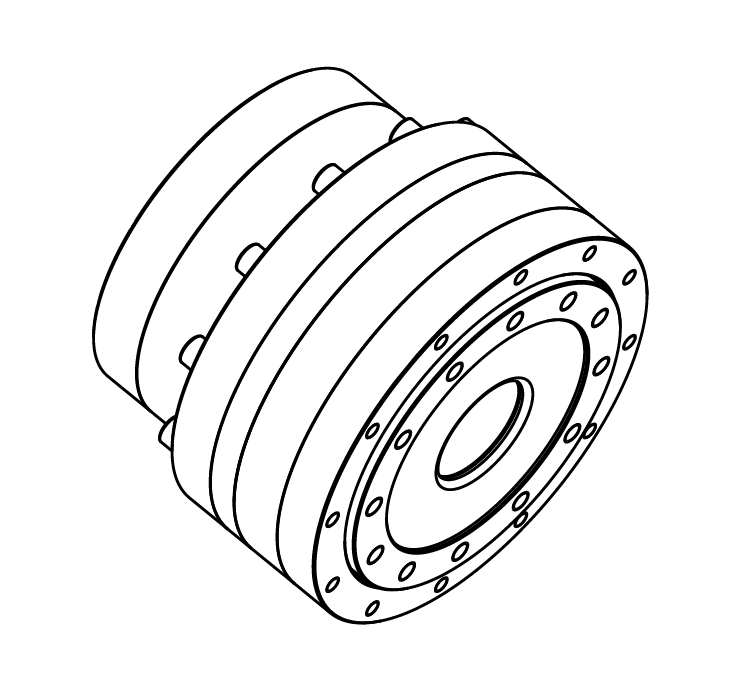
The gearbox is the soul of any precision robot joint. It sets the torque density, defines the positioning accuracy, and often determines the overall cost and service life. Choosing among the three major precision gearbox families—harmonic drive, RV (rotary vector), and planetary—is a decision every robot designer faces. This guide examines each from first principles.
How Each Gearbox Works
Harmonic Drive (Strain Wave Gear)
A harmonic drive has only three components: a wave generator (elliptical ball bearing), a flexspline (thin-walled deformable cylinder with external teeth), and a circular spline (rigid ring with internal teeth). As the wave generator rotates, it deforms the flexspline into an ellipse, engaging teeth at the two major-axis points. Because the flexspline has slightly fewer teeth than the circular spline, one full rotation of the wave generator advances the output by the tooth difference.
- Backlash: Essentially zero (preloaded by design)
- Ratios: 50:1 to 160:1 from a single stage
- Torque/Mass Ratio: The highest of the three
RV Reducer (Rotary Vector)
An RV reducer is a two-stage device. The first stage is a planetary gear set (input); the second stage uses cycloidal discs with eccentric cam input. The cycloidal disc orbits around a pin wheel, and the output motion is taken from crank shafts that convert the orbital motion back to concentric rotation. This is mechanically more complex but offers exceptional torsional stiffness.
- Backlash: Sub-arcmin for precision grades
- Ratios: 30:1 to 260:1 typical
- Torsional Stiffness: 3–5× higher than harmonic
Planetary Gearbox
Planetary gearboxes have been the industrial workhorse for decades: a sun gear drives multiple planet gears riding in a carrier, all meshed within an outer ring gear. Their simplicity, low cost, and high efficiency make them ideal for many tasks, though they inherently have more backlash than strain-wave or cycloidal designs.
- Backlash: 3–15 arcmin for precision; >30 arcmin for standard
- Ratios: 3:1 to 100:1 in a single stage; higher with staging
- Efficiency: 90–97% per stage—highest of the three
Comprehensive Comparison
| Parameter | Harmonic Drive | RV Reducer | Planetary |
|---|---|---|---|
| Backlash | <1 arcmin | <1 arcmin (precision grade) | 3–15 arcmin |
| Torque/Mass | Highest | High | Moderate |
| Torsional Stiffness | Moderate | Very High | Moderate-High |
| Efficiency | 65–85% | 85–92% | 90–97% |
| Single-Stage Ratio | 50–160:1 | 30–260:1 | 3–100:1 |
| Service Life | Long (flexspline fatigue limit) | Very Long | Long (standard bearings) |
| Lubrication | Grease, sealed | Grease or oil bath | Grease or oil |
| Cost (relative) | Medium-High | High | Low-Medium |
| Best Suited For | Cobots, service robots, wrist joints | Industrial robot base/shoulder, CNC rotary tables | AGVs, conveyors, pick-and-place, mobile robots |
Application-Specific Selection Guide
Cobot Arm Joints → Harmonic Drive
Collaborative robots need compact torque density, zero backlash, and smooth, low-speed motion. The harmonic drive's inherent advantages align perfectly: high single-stage ratios eliminate the need for multi-stage gear trains, the elliptical engagement provides averaging that masks manufacturing tolerances, and the lightweight design reduces the load on upstream joints. A typical 6-axis cobot uses harmonic drives in all six joints.
Industrial Robot Base & Shoulder → RV Reducer
Where an industrial robot experiences the highest loads—the base rotation (J1) and shoulder pitch (J2)—RV reducers dominate. Their cycloidal pin-wheel construction provides the high torsional stiffness needed to hold position under heavy payloads without windup. The two-stage design distributes load over many contact points, providing long service life under continuous-duty cycles.
AGVs, Pick-and-Place, Conveyors → Planetary
For applications where sub-arcmin accuracy is unnecessary, planetary gearboxes offer the best value. Their high efficiency reduces motor sizing requirements and heat generation. Standard backlash grades (5–15 arcmin) are more than adequate for mobile robot drive wheels or pick-and-place end effectors where endpoint errors are corrected by vision feedback.
The Emerging Trend: Integrated Joint Modules
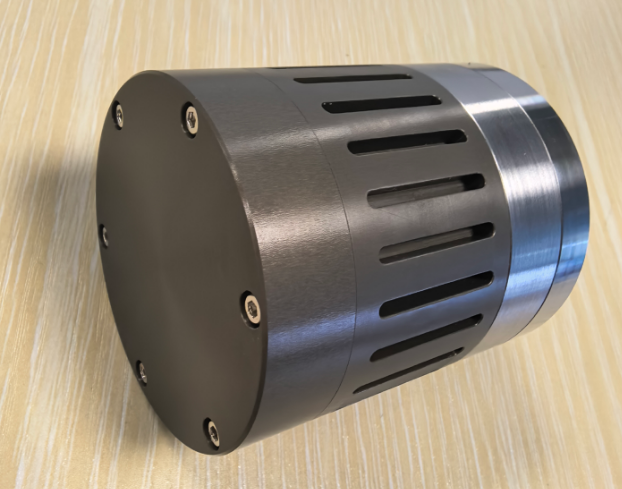
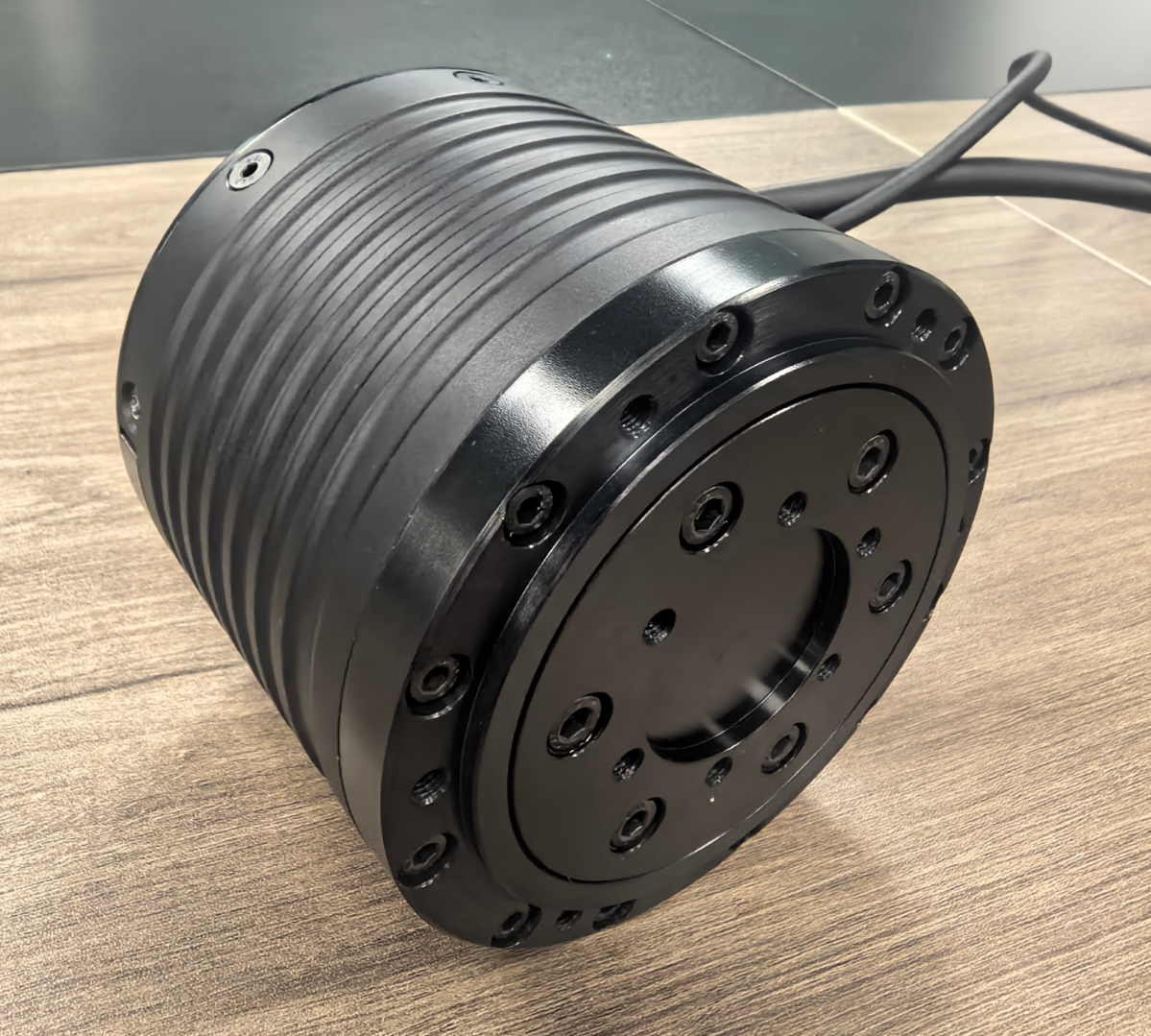
Rather than sourcing motor and gearbox separately and wrestling with coupling, alignment, and lubrication, more robot builders are adopting pre-integrated joint modules. These combine the motor, gearbox, encoder, drive electronics, and brake into a single validated assembly. Repunite's JTM series offers harmonic drive joint modules from 14 Nm to 150 Nm for this exact purpose.
Conclusion
There is no universal "best" gearbox—only the right one for each joint in your robot. Harmonic drives excel in compact, zero-backlash applications from 14 Nm to 150 Nm. RV reducers provide unmatched stiffness for heavy industrial joints. Planetary gearboxes offer efficiency and value where sub-arcmin accuracy isn't required. And integrated joint modules eliminate the integration headache entirely, letting you bolt on a validated solution and focus on your robot's software and application.
Designing a Robot and Need Joint Modules?
We offer harmonic-drive joint modules from 14 Nm to 150 Nm—integrated motor, gearbox, encoder, driver, and brake in one package.
Contact Our Engineers →