
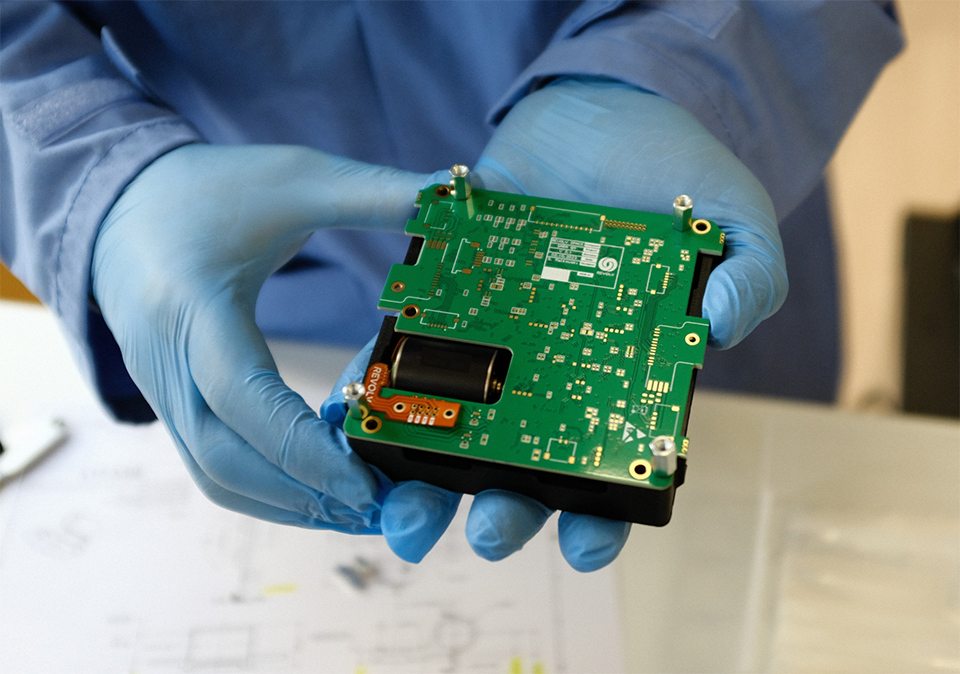
Revolv Space Closes EUR 5M Series A as SmallSat Solar Array Drives Move to Serial Production
Turin-based Revolv Space closed a EUR 5 million (USD 5.6M) Series A led by Deep Ocean Capital SGR on November 11, taking total funding to EUR 8.6M. Two thirds of the round goes to industrialising qualified solar array drive assemblies, deployment hinges and power transfer systems, expanding the Turin plant from 500 to 1,500 sq m with a 60% headcount increase and a target of hundreds of units per year. The company has 27 units in orbit and 83 delivered across eight international customers.
The use of proceeds is pointed at industrialisation rather than proof of concept: about two thirds of the capital scales production of already qualified motion products, with the remainder funding a solar array line compatible with the existing portfolio, extending Revolv toward pre-integrated power generation subsystems. The Turin plant grows from 500 to 1,500 square metres, the 40-person team expands by 60% with 25 technical hires, and investment goes into technician training and supply chain optimisation. The stated goal is a cadence of hundreds of units a year: constellation customers need standardised components, repeatable performance and predictable price and lead time, not one-off demonstrators.
Revolv supplies autonomous solar array drive assemblies (SADAs), deployment hinges and power transfer systems for satellites up to 1,000 kg in LEO and GEO. The SARA solar tracking drive, HOLLY deployment mechanism and PAVEL hinge were validated in orbit aboard a D-Orbit ION carrier in 2025. The company has 27 units operating in orbit and 83 units produced and delivered across eight international customers; it recently won a contract to supply SARA Pro drives to Infinite Orbits for geostationary servicing platforms and delivered flight models to Blue Canyon Technologies for a NASA mission.
From an engineering standpoint, the round says the bottleneck sits in the mechanism, not the algorithm. Solar array pointing accuracy sets orbital average power - vendors put tracked arrays at close to twice the output of fixed wings - and a SADA is fundamentally a rotary joint that passes power on every revolution while also carrying position feedback, long-life lubrication and vacuum compatibility. A satellite cannot be serviced once it is up, so single-unit reliability requirements sit far above those of ground equipment. The revolution count is not extreme: a sun-synchronous orbit gives about 14.5 revolutions per day, roughly 26,500 turns over a five-year mission. What makes it hard is vacuum, thermal cycling, cold welding and zero maintenance.
The same problem appears every day on the ground: an azimuth turntable carries 48 V power, encoder feedback and network traffic from a fixed base to a rotating load while holding zero backlash, low jitter and long life. Repunite's single-axis azimuth servo turntables use a hollow-shaft direct drive with an integrated slip ring for unlimited continuous rotation in 20 kg and 40 kg load classes, with +/-0.01 degree accuracy on the 40 kg class (0.1 degree on the 20 kg class); two-axis stabilised platforms handle roll and pitch disturbance compensation, paired with MIL-grade 48 V servo drives rated for 3x overload and -40 degree C cold start for shipborne, vehicle-mounted and field deployments. Space-grade and ground-grade hardware differ completely in vacuum, thermal-vacuum, radiation and redundancy requirements - Repunite focuses on ground and mobile platforms - but both rest on the same method: zero-backlash transmission, slip-ring power and signal transfer, redundant position feedback and long-life design.
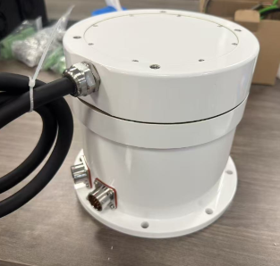
Single-Axis Azimuth Servo Turntable 40 - Direct Drive
Hollow-shaft direct drive, zero backlash, +/-0.01 deg accuracy, built-in slip ring for unlimited rotation, 40 kg load
View details →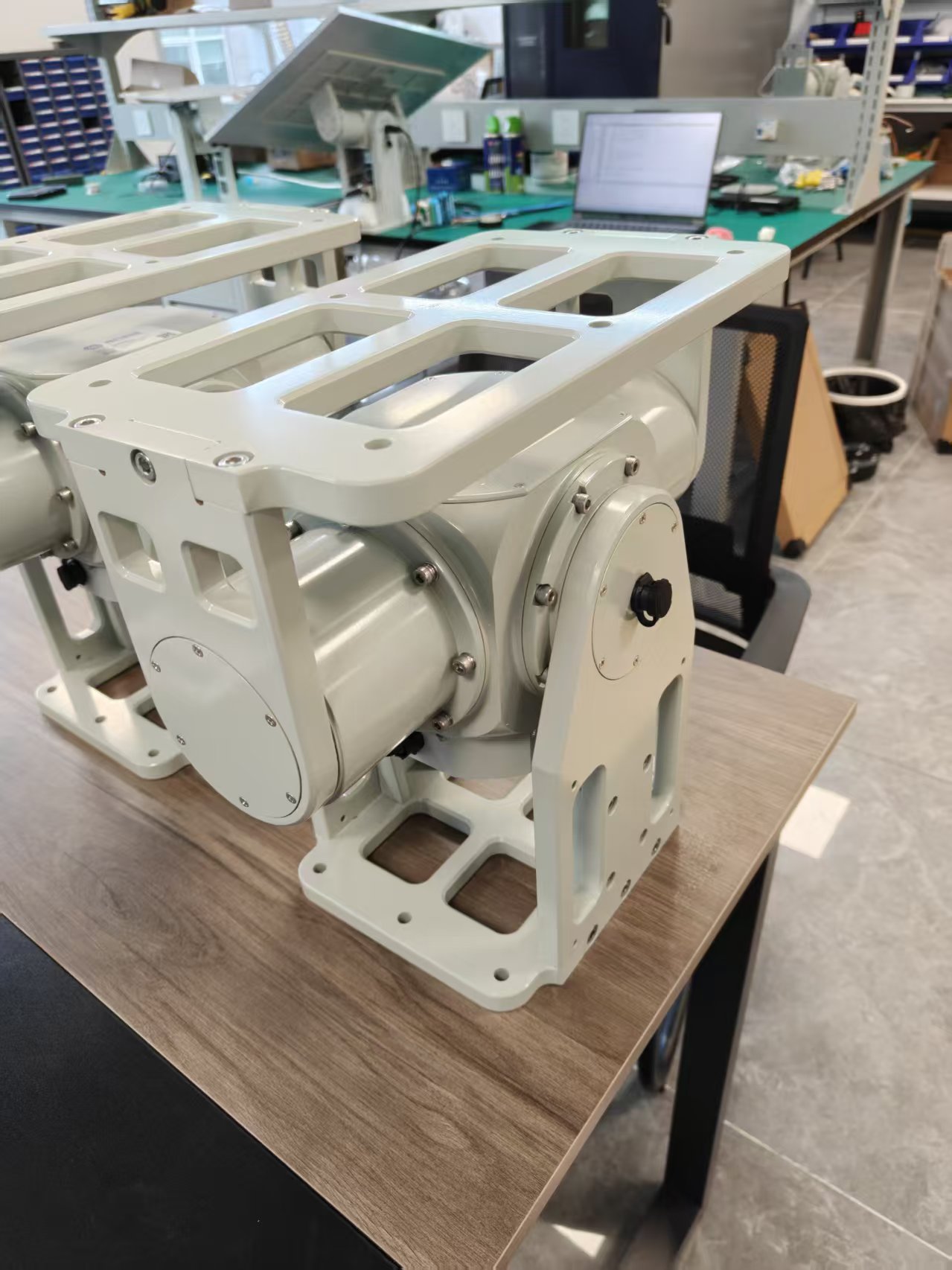
Shipborne SATCOM Stabilized Platform 25KG
Roll/pitch disturbance compensation, flat-panel antenna compatible, lightweight
View details →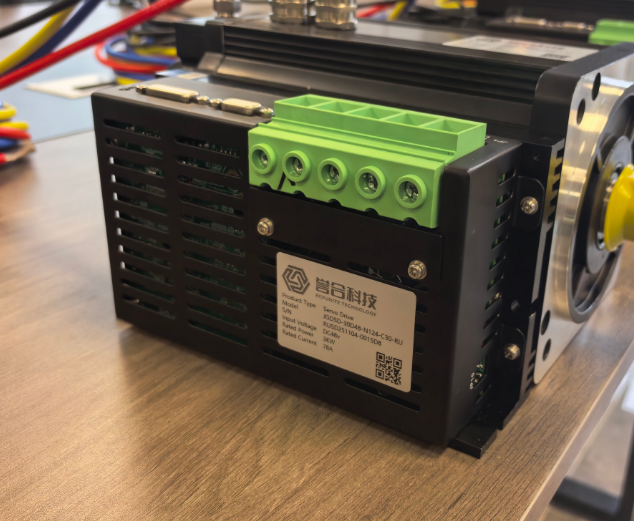
JGDSD 3kW 48V MIL-Grade Servo Drive
3x overload, -40 to +85 deg C, CANopen/RS485, vibration and shock tolerant
View details →Source: SatNews · November 11, 2026
Back to News →