BAE Systems Wins U.S. Space Force Contract for Ultra-Compact Resilient Space Terminals
BAE Systems has won a U.S. Space Force SSC contract to develop ultra-compact RF terminals for a space-based data transport layer: LEO-to-GEO coverage, SWaP-C packaging and open-API dynamic beam pointing, with prototypes demonstrated in simulated orbital environments before high-rate production.
On October 15, BAE Systems announced that it has been awarded a contract by the U.S. Space Force Space Systems Command (SSC) to design and demonstrate ultra-compact radio-frequency (RF) terminals for a space-based data transport layer. Under the development agreement, BAE will engineer compact, flight-qualified RF terminals that establish resilient space-to-space and space-to-ground communications across multiple orbital regimes, from LEO out to GEO.
The award is part of the broader DoD initiative to build an interconnected, jam-resistant data transport layer across defense and allied space assets. As electronic warfare and counterspace threats intensify, the Space Force is accelerating investment in tactical communications hardware that keeps crosslinks uninterrupted in contested environments. BAE already serves as prime for the Resilient Missile Warning and Tracking constellation in MEO and has delivered sensor flight hardware for the Next-Generation Polar missile-warning spacecraft; the new terminals extend that portfolio into high-density RF crosslinks that bridge multi-orbit constellations with the tactical user segment.
BAE Systems radiation-hardened radio hardware (Image credit: BAE Systems / SatNews)
The solution builds on the BAE family of space-hardened software-defined radios (SDRs), designed to keep communicating through severe electromagnetic interference, adversary jamming and radiation belts. Key characteristics include a multi-orbit operational range spanning LEO to GEO; a miniaturized SWaP-C profile that fits space-constrained small satellites; dynamic inter-payload pointing through an open API for rapid, precise beam-steering and terminal pointing between communicating payloads; and military-grade encryption, cybersecurity and environmental hardening baselines. Prototype RF flight terminals will be built, tested and demonstrated in simulated orbital environments - validating open-API command sequences, multi-band frequency agility and crosslink acquisition timelines - before the company scales production for high-rate procurement by future operational constellations.
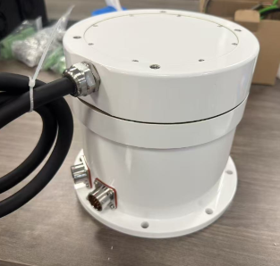
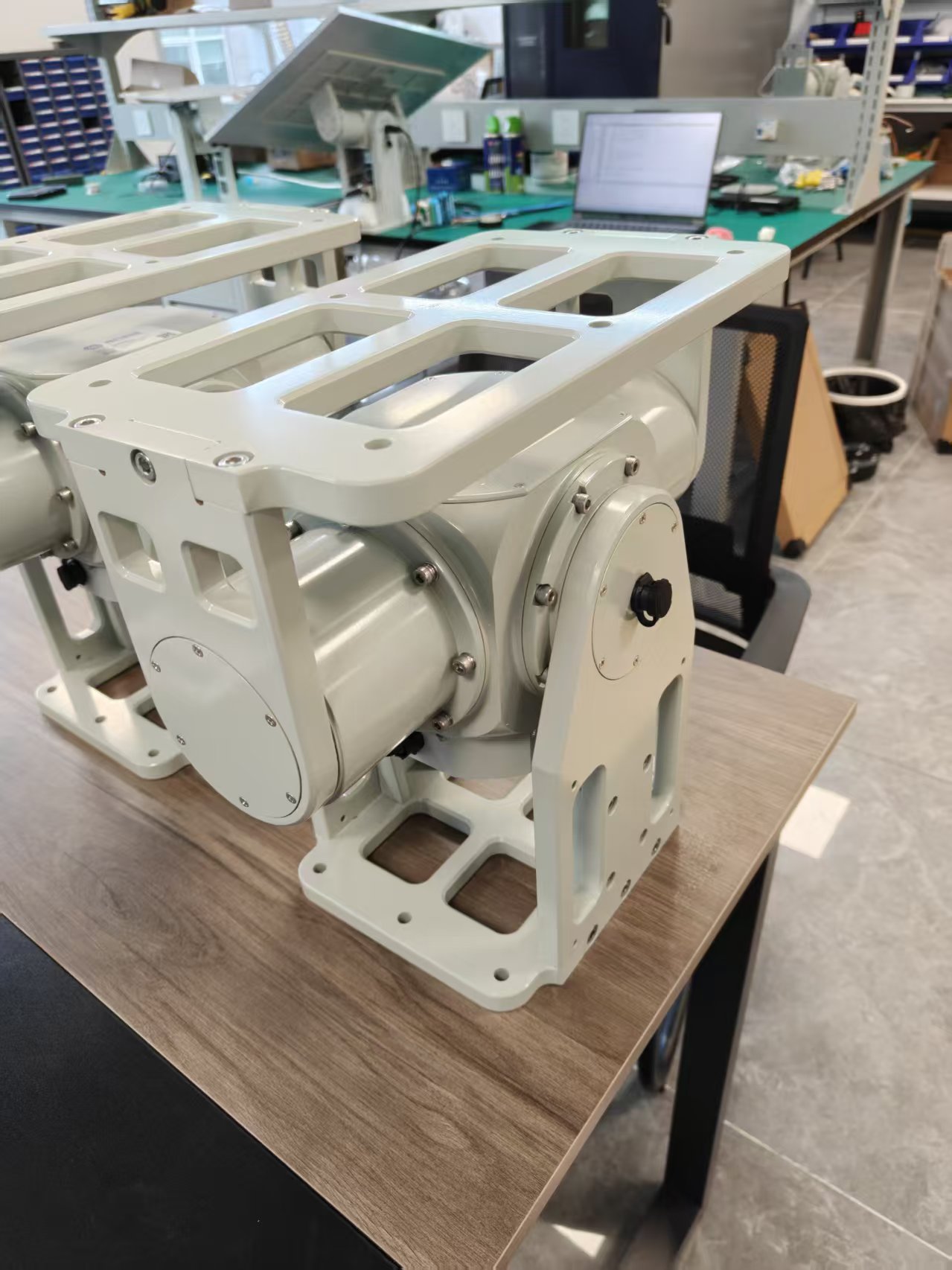
From an engineering standpoint, the rapid and precise pointing between payloads that these terminals promise ultimately lands on the servo pointing mechanism: beam-pointing accuracy, dynamic tracking bandwidth and SWaP constraints together decide whether the link stays closed under platform disturbance. Repunite supplies single-axis azimuth servo turntables (hollow-shaft direct drive, zero backlash, ±0.01° positioning accuracy, integrated slip ring for unlimited rotation) and two-axis stabilized platforms (roll/pitch disturbance compensation, flat-panel-antenna compatible), paired with MIL-grade 48V servo drives rated for -40 °C cold start and 3x overload - proven servo building blocks for satellite terminal and mobile-antenna pointing systems.
Single-Axis Azimuth Servo Turntable 40 · Direct Drive
Hollow-shaft direct drive, zero backlash, ±0.01° accuracy, built-in slip ring, 40kg load