GomSpace Leads ESA-Funded Arctic Maritime Communications Satellite Feasibility Study: VDES Payloads and Polar Orbit Architectures Take Shape
On September 24, 2026, Danish smallsat manufacturer GomSpace confirmed its role in an ESA-funded feasibility study to define a dedicated Arctic maritime communications constellation, working with Sternula, London Economics Denmark, and Canadian Arctic consultancy PIRC. The DKK 3.8 million (~USD 560,000) six-month study allocates DKK 1 million to evaluating spacecraft bus architectures and VDES payload integration, with the final report due to ESA in February 2027.
On September 24, 2026, Danish smallsat manufacturer GomSpace confirmed its participation in an ESA-funded feasibility study to define system concepts for a dedicated Arctic satellite constellation serving maritime communications. The consortium also includes maritime data operator Sternula, London Economics Denmark, and Canadian Arctic consultancy PIRC, tasked with establishing user requirements, commercial models, and technical architectures for resilient maritime digital communications across high-latitude polar routes.
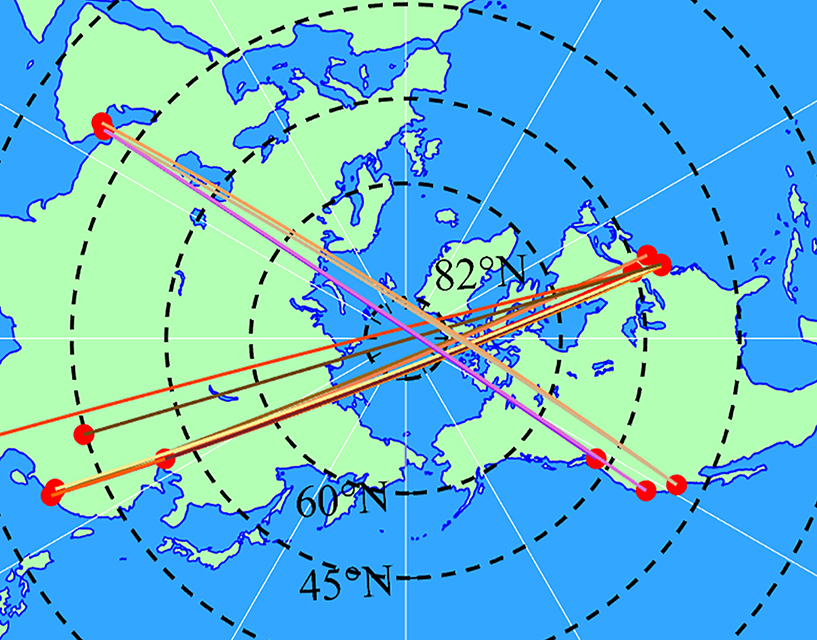
The engineering rationale is straightforward: geostationary (GEO) communication satellites suffer inherent line-of-sight elevation limitations at high latitudes, leaving polar shipping routes in long-standing coverage gaps. The consortium will evaluate VHF Data Exchange System (VDES) payloads and secure satellite communications hardware capable of operating in polar orbits, through technical trade studies, orbital coverage modeling, and commercial sustainability analyses.
The six-month research activity carries a total contract value of DKK 3.8 million (~USD 560,000), with DKK 1 million (~USD 147,000) directly allocated to GomSpace to evaluate spacecraft bus architectures and payload integration requirements. The Danish government has earmarked DKK 12.7 million for polar space infrastructure within the 2026-2028 ESA budget cycle, of which DKK 9.5 million is reserved for potential follow-on satellite manufacturing and in-orbit demonstration missions.
"As Arctic activity increases, the need for resilient, high-integrity communication becomes unavoidable," stated Oliver Schiewe, Vice President of Business Unit Satellite Systems at GomSpace. "This study is an important step toward a viable future constellation, and we are pleased to contribute our technology and operational know-how to help shape a system that can deliver long-term value for Arctic stakeholders."
The consortium will submit its final report to ESA and national space authorities by February 2027, guiding procurement decisions and hardware specifications for subsequent Arctic demonstration launches planned under the 2026-2028 budget window.
For the ground segment, polar and high-latitude maritime connectivity ultimately lands on shipborne terminals: low-elevation tracking, pointing stability under hull roll and pitch, and cold-temperature reliability are the defining challenges for antenna stabilization pedestals. Chengdu Yuhe Technology's shipborne SATCOM stabilized platform (PTU-Shipborne) and 2-axis stabilized platform product line are servo pointing solutions engineered precisely for such low-elevation, heavy-sea-state scenarios.
GomSpace-led ESA Arctic maritime communications study (Image: SatNews)